Anthropology of Crime
and Criminalisation
European Association of Social Anthropologists (EASA) network
Anthropology of Crime
and Criminalisation
European Association of Social Anthropologists (EASA) network
AnthroCrime & VICES Hybrid Workshop

REGISTER HERE
(whether if you attend in person or online)

The Anthropology of Crime and Criminalisation (AnthroCrime) Network is delighted to relaunch with a timely and engaging workshop that brings together leading scholars, practitioners, students, and community members to reflect on one of the most pressing questions in contemporary justice and social policy:
Whose knowledge counts when addressing crime, violence, and social harm?
Across the world, people with lived experience of criminalisation, incarceration, gang involvement, migration control, and social exclusion are increasingly taking on leadership roles in violence prevention, mentoring, advocacy, and justice reform. Often referred to as credible messengers, they are challenging traditional assumptions about expertise and demonstrating how lived experience can become a powerful resource for supporting individuals, strengthening communities, and preventing violence.
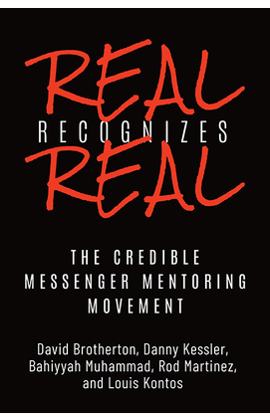
The workshop opens with a launch and book presentation of David Brotherton (The Graduate Center, CUNY), Real Recognizes Real: The Credible Messenger Mentoring Movement (Temple University Press, 2026). The book examines the emergence of credible messengers, individuals whose authority derives from lived experience of criminalisation, incarceration, and community violence, and their growing role in violence prevention, youth mentoring, and justice reform initiatives.
The discussion will bring researchers and practitioners into direct conversation. We are pleased to welcome David Brotherton, alongside Robin van den Maagdenberg, founder of ADAMAS and representative of Credible Messengers Netherlands, and Ryan “Flaco” Rising, founder and executive director of the West Coast Credible Messengers (University of California, Irvine (UCI). Together with scholars from Vrije Universiteit Amsterdam, the University of Amsterdam, and beyond, they will reflect on the promises and tensions of lived experience as expertise, exploring how credibility, recognition, and legitimacy are produced within contemporary systems of governance, social intervention, and criminal justice.
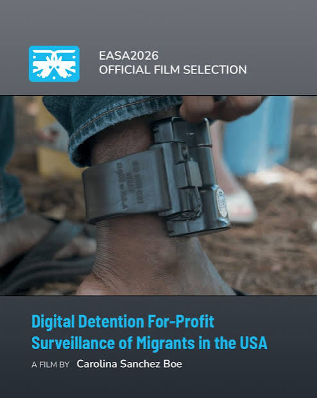
Following the roundtable, we are honoured to welcome Carolina Sánchez Boe (Brown University), an anthropologist, sociologist, filmmaker, and visual artist whose work explores deportation, prisons, electronic monitoring, facial recognition technologies, and contemporary regimes of migration control.
Carolina will present her research and introduce her documentary film Digital Detention, followed by a screening and discussion with participants. Combining ethnographic research with documentary filmmaking, her work provides a compelling perspective on the expanding role of digital technologies in governing mobility, surveillance, and confinement.
By bringing together academic research, policy debates, community practice, and lived experience, the workshop aims to foster conversations that extend beyond disciplinary boundaries and connect scholarship to pressing social realities.
The event also marks the public relaunch of the AnthroCrime Network within the European Association of Social Anthropologists (EASA). We warmly welcome established scholars, early-career researchers, students, practitioners, activists, and community organisations interested in anthropology, criminology, law, migration, and social justice to join us in shaping the future of the network.
The workshop is convened by Veronika Nagy (Vrije Universiteit Amsterdam), Ana Chiritoiu (Uppsala University), and Lene Swetzer (Geneva Graduate Institute).
This event is organised in collaboration with the VU Interdisciplinary Centre for European Studies (VICES). We gratefully acknowledge VICES for its generous financial and logistical support. We look forward to welcoming you in Amsterdam or online on 10 December 2026.